

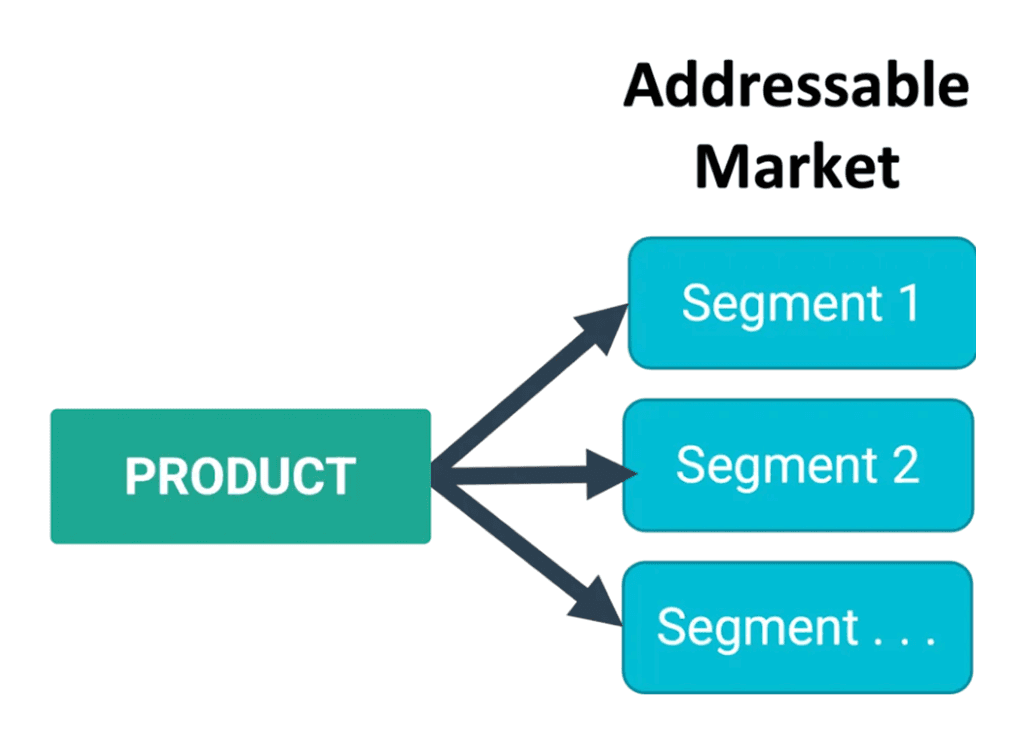
Traditional Software Product/Market Fit “Iteration”
For marketplaces, this task is essentially doubled. For an early-stage marketplace to get its markets selection right, it needs to identify customer segments in two markets: the buyer-side and the seller-side (note: it is at least two markets, as marketplaces can serve three or more different customer groups on the same platform. For simplicity, this article will discuss this concept relative to serving two markets, the buyer and seller markets, as some marketplaces can serve three or more distinct customer groups). The goal for marketplaces is to bring buyers and sellers together to interact and, ultimately, complete some type of commercial transaction. What makes this even trickier is getting the market segments pairing right, i.e., simultaneously finding the right buyer-side segment that wants what the specific target seller-side segment has to offer.
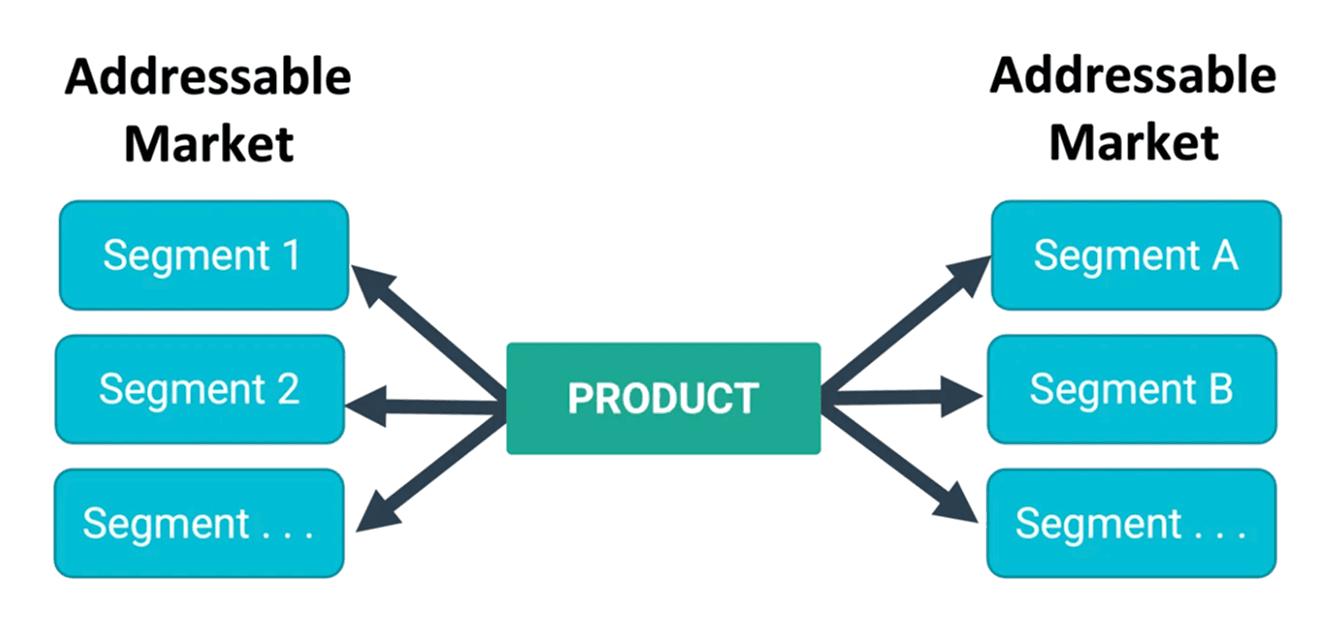
Marketplace Product/Market Fit “Iteration”
Next let’s look at the overall product offering for marketplaces.
First, beyond getting the product functionality, interface design, user flows, etc. aligned to for both buyers and seller customers’ needs, there are additional components to the overall product offering that influence the success of a marketplace that do not come into play with traditional software. When a buyer looks for good or service to buy, is there a sufficient selection of supply? Do they trust the quality of the goods or services being offered? When a seller joins, is there sufficient demand to justify continuing to invest time, energy, and, usually, money to participate in the marketplace? Do participants using the marketplace feel safe and believe that they’ll be treated fairly if something doesn’t work out? Do the costs associated with working with the marketplace, particularly any fees, justify the benefits of using the marketplace? With all of these factors to consider, a marketplace product offering is quite a bit more substantial than a traditional software product.
Once the attractive markets have been identified, the task of changing behavior remains, from doing things the previous way to using the new marketplace product. For a traditional software product, the “locus of change” is a business process, task, or function that would benefit from improved automation. This requires getting individual users or companies to switch from either a manual process or some other software solution — no minor undertaking. For marketplaces, the “locus of change” is a market (in this context, the market is the buyer-seller market enabled by the marketplace), which may or may not already be functioning, and which, by definition, contains many players. A successful marketplace will need to change the behavior of not just an individual user or company, but an entire market. Furthermore, marketplaces often exist within a broader ecosystem of players, that can include business partners, government agencies, community organizations, etc., that also need to be aligned with the mission of the marketplace.
With all these factors in mind, developing a successful new marketplace is quite a bit more complicated than it is for traditional software.